
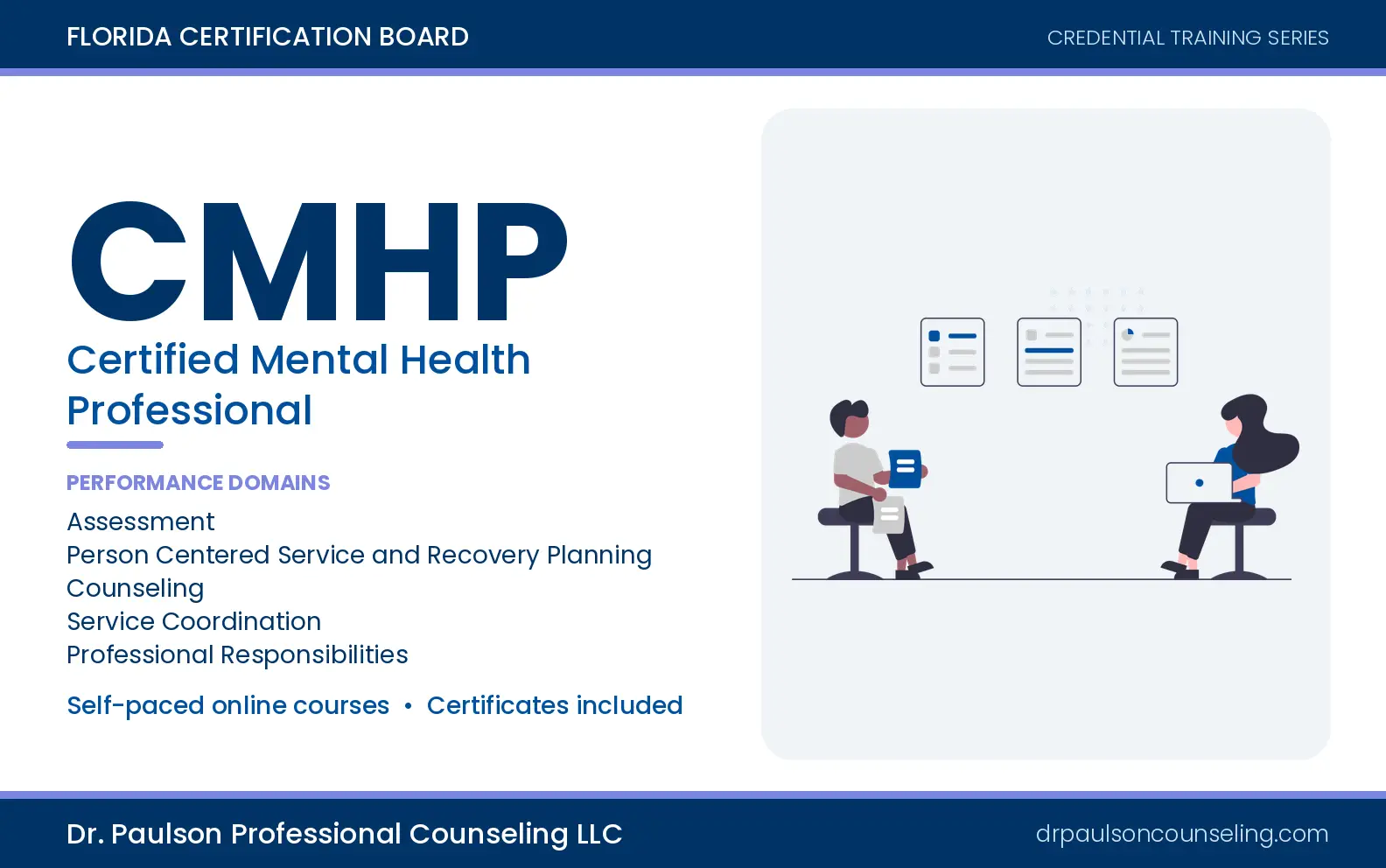
Cognitive Behavioral Foundations (10 Contact Hours)

- 1 Section
- 12 Lessons
- 2 Quizzes
- 10h Duration
Course Content
- Course Overview & Introduction
- Module 1: The Cognitive Model
- Module 2: Behavioral Principles and the ABC Model
- Module 3: Automatic Thoughts and Common Thinking Patterns
- Module 4: Supporting Thought Records and Balanced Thinking
- Module 5: Behavioral Activation
- Module 6: Relaxation and Managing Physical Arousal
- Module 7: Problem-Solving Skills
- Module 8: Social Skills and Behavior Rehearsal
- Module 9: Between-Session Practice and Self-Monitoring
- Module 10: Culture, Co-Occurring Conditions, and the CMHP Role
- References
- Post Test
- Program Evaluation
Cognitive Behavioral Foundations is a 10-hour continuing education course for Certified Mental Health Professionals (CMHPs) who support people receiving cognitive behavioral services or who want to use cognitive behavioral principles in skill-building, case management, and community support. Cognitive behavioral approaches are among the most widely studied and used in behavioral health. They rest on a simple, practical idea: how people think and what they do affect how they feel, and learning new ways of thinking and acting can reduce distress and help people reach their goals. This course teaches the cognitive model, core behavioral principles, automatic thoughts and common thinking patterns, support for thought records, behavioral activation, relaxation and arousal management, problem-solving, social skills practice, and between-session practice, along with cultural responsiveness and the CMHP's scope in supporting, not providing, cognitive behavioral therapy.
Want to submit a review? Login
Related Courses
Professional Responsibilities for Resiliency Advocates (3 Contact Hours)
Work through ethical dilemmas with the FCB Code of Ethics and a seven-step model
Maintain professional boundaries around dual relationships, gifts, and social media
Meet Florida child abuse reporting duties and protect privacy under HIPAA and FERPA
Resiliency Support for Resiliency Advocates (3 Contact Hours)
Coach coping and emotion regulation skills and model healthy responses to stress
Encourage positive behavior and redirect problems calmly, without shame
Guide goal setting with if-then plans and strengths-based problem solving
Behavioral Observations for Resiliency Advocates (3 Contact Hours)
Record objective, bias-aware observations with the ABC method
Stay situationally aware through active supervision and precorrection
Spot signs of distress, trauma responses, suicide risk, and possible abuse or neglect