
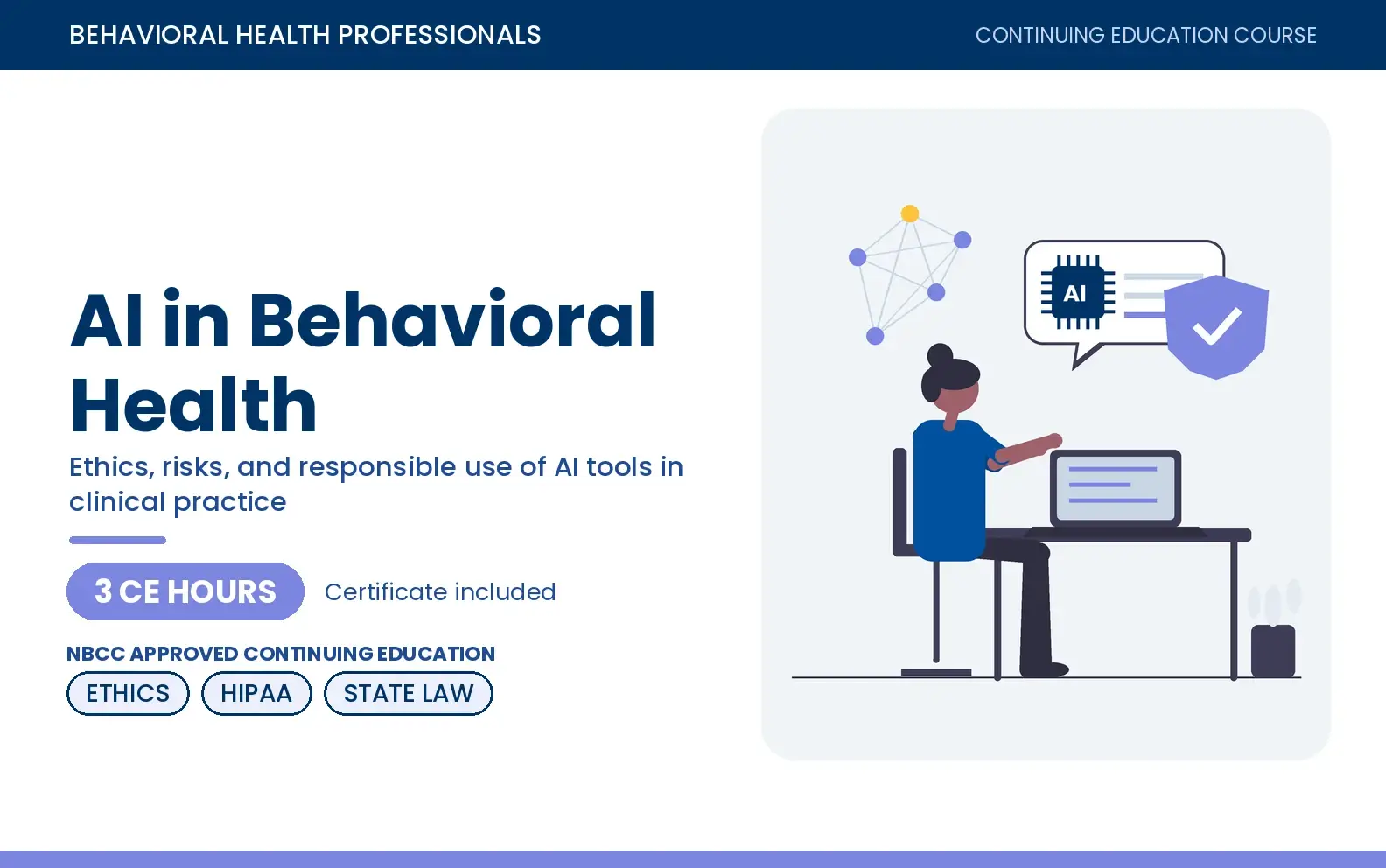
AI and Clinical Documentation in Ohio: Ethics, Risks, and Responsible Use (4 Hours) -Ohio

- 1 Section
- 6 Lessons
- 2 Quizzes
- 4h Duration
AI and Clinical Documentation in Ohio
- Course Overview & Introduction
- Module 1: Understanding Artificial Intelligence in Behavioral Health Practice
- Module 2: The Legal and Regulatory Landscape for AI in Behavioral Health
- Module 3: Ethical and Responsible Use of AI in Clinical Practice
- Module 4: Ohio Rules on AI, Clinical Documentation, and Client Information
- References
- Post Test
- Program Evaluation
AI and Clinical Documentation in Ohio: Ethics, Risks, and Responsible Use is a four-hour, text-based home study course for Ohio counselors, social workers, and marriage and family therapists. It explains how AI works, where it shows up in behavioral health, and the risks of AI tools, then focuses on Ohio: the CSWMFT Board's AI guidance and proposed AI rules, how Ohio's record-keeping rule (OAC 4757-5-09) and teletherapy rule (OAC 4757-5-13) apply to AI-drafted notes and ambient scribes, why client information does not belong in consumer chatbots such as free versions of ChatGPT, informed consent language, and an Ohio-ready documentation workflow and AI policy.
State Board and Certification Requirements: Each licensing board and certification body sets its own continuing education rules. Please check your board's current rules to confirm how these hours apply to you. This course is not approved or endorsed by the Ohio CSWMFT Board.
Approvals: Dr. Paulson Professional Counseling LLC has been approved by NBCC as an Approved Continuing Education Provider, ACEP No. 7987. Programs that do not qualify for NBCC credit are clearly identified. Dr. Paulson Professional Counseling LLC is solely responsible for all aspects of the programs.
Want to submit a review? Login
Related Courses
Healing through Family & Community for Arizona Professionals (6 CE Hours)
Foundations of Client, Family, and Community Education
The Continuum of Care and Managed Care
Referrals and Care Coordination
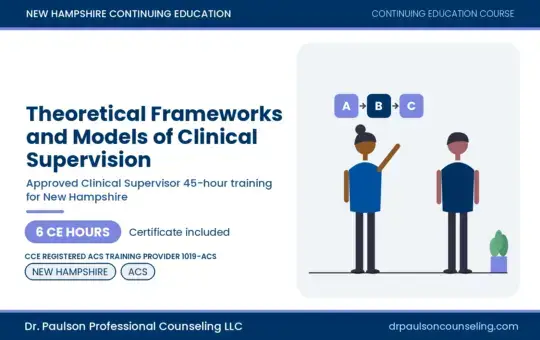
Theoretical Frameworks and Models of Clinical Supervision (6 Hours) -West Virginia
Supervisors apply social role models to select among teaching, counseling, and consulting stances based on supervisee need rather than habit.
Professionals assess developmental stage by domain and set the supervisory environment slightly beyond current functioning to prompt growth.
Clinical educators recognize the strengths and limits of psychodynamic, cognitive behavioral, person-centered, and systemic supervision traditions.
Theoretical Frameworks and Models of Clinical Supervision (6 Hours) -Tennessee
Supervisors apply social role models to select among teaching, counseling, and consulting stances based on supervisee need rather than habit.
Professionals assess developmental stage by domain and set the supervisory environment slightly beyond current functioning to prompt growth.
Clinical educators recognize the strengths and limits of psychodynamic, cognitive behavioral, person-centered, and systemic supervision traditions.