
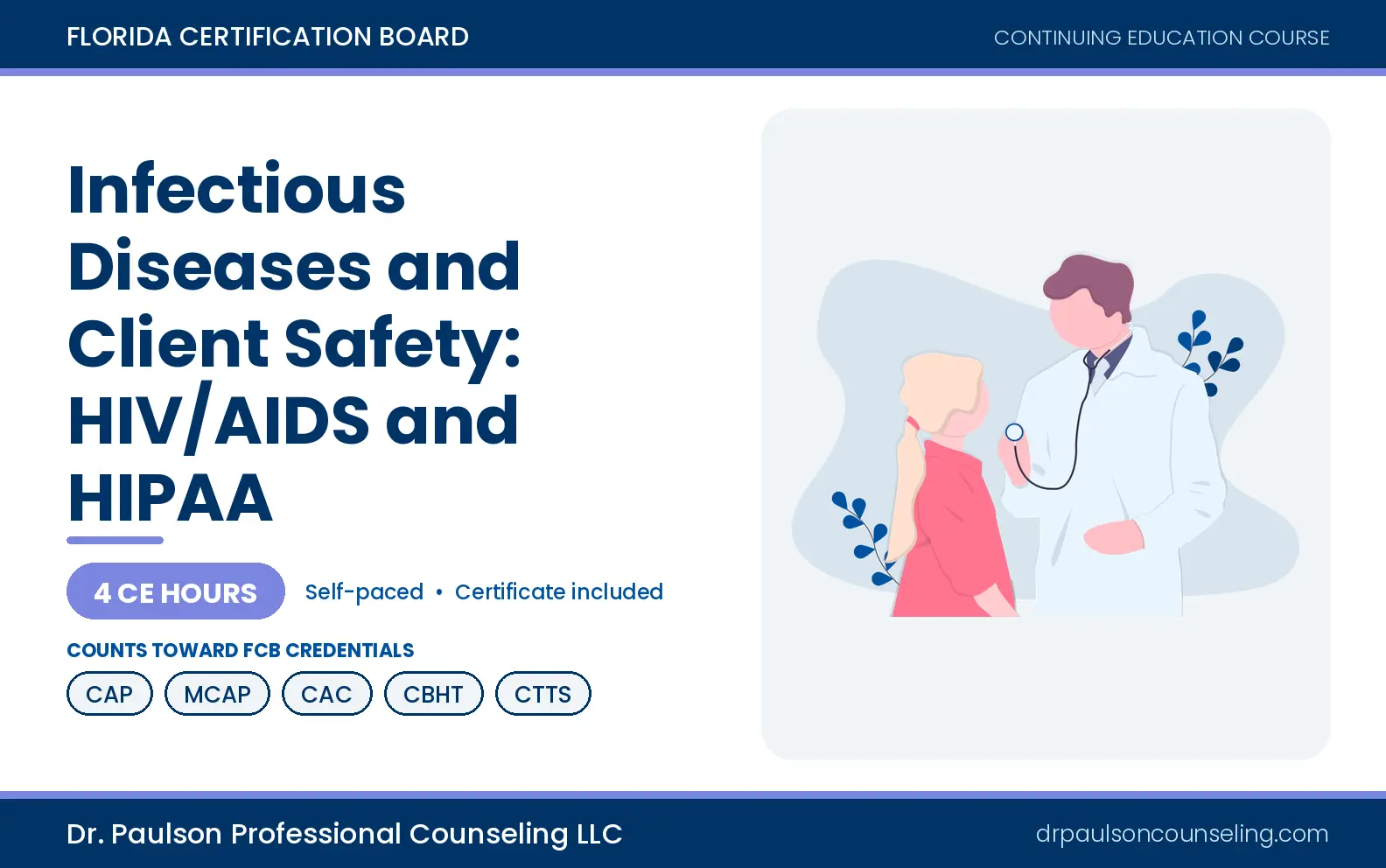
Infectious Diseases and Client Safety: HIV/AIDS and HIPAA (4 CE Hours)

- 1 Section
- 5 Lessons
- 1 Quiz
- 4h Duration
Infectious Diseases and Client Safety: HIV/AIDS and HIPAA
- Introduction & Outline
- Module 1 The Silent Syndemic: Intersectionality of Infectious Disease and Addiction
- Module 2 The Vault of Privacy: Navigating HIPAA and 42 CFR Part 2
- Module 3 Dignity in Care: Cultural Humility and Ethical Counseling
- Module 4 Operationalizing Safety: Risk Assessment, Testing, and Crisis Management
- Post Test Infectious Diseases and Client Safety
This comprehensive 4-hour continuing education course provides Certified Behavioral Health Technicians, Tobacco Treatment Specialists, and Addiction Professionals with the critical knowledge required to manage the intersection of infectious diseases and client privacy. Participants will explore the epidemiology of HIV/AIDS and Hepatitis C within substance use populations, bridging physiological health with behavioral interventions. The curriculum offers a deep dive into the legal complexities of HIPAA and 42 CFR Part 2, ensuring practitioners can navigate the "Vault of Privacy" with legal confidence. Through a lens of cultural humility and evidence-based practice, professionals will learn to implement safety protocols, conduct ethical screenings, and manage crises related to health diagnoses. This course is applicable to the following certifications: Certified Addiction Professionals (CAP/MCAP), Certified Behavioral Health Technicians (CBHT), Certified Addiction Counselor (CAC) and Certified Tobacco Treatment Specialists (CTTS).
Want to submit a review? Login
Related Courses
Professional Responsibilities for Resiliency Advocates (3 Contact Hours)
Work through ethical dilemmas with the FCB Code of Ethics and a seven-step model
Maintain professional boundaries around dual relationships, gifts, and social media
Meet Florida child abuse reporting duties and protect privacy under HIPAA and FERPA
Resiliency Support for Resiliency Advocates (3 Contact Hours)
Coach coping and emotion regulation skills and model healthy responses to stress
Encourage positive behavior and redirect problems calmly, without shame
Guide goal setting with if-then plans and strengths-based problem solving
Behavioral Observations for Resiliency Advocates (3 Contact Hours)
Record objective, bias-aware observations with the ABC method
Stay situationally aware through active supervision and precorrection
Spot signs of distress, trauma responses, suicide risk, and possible abuse or neglect