
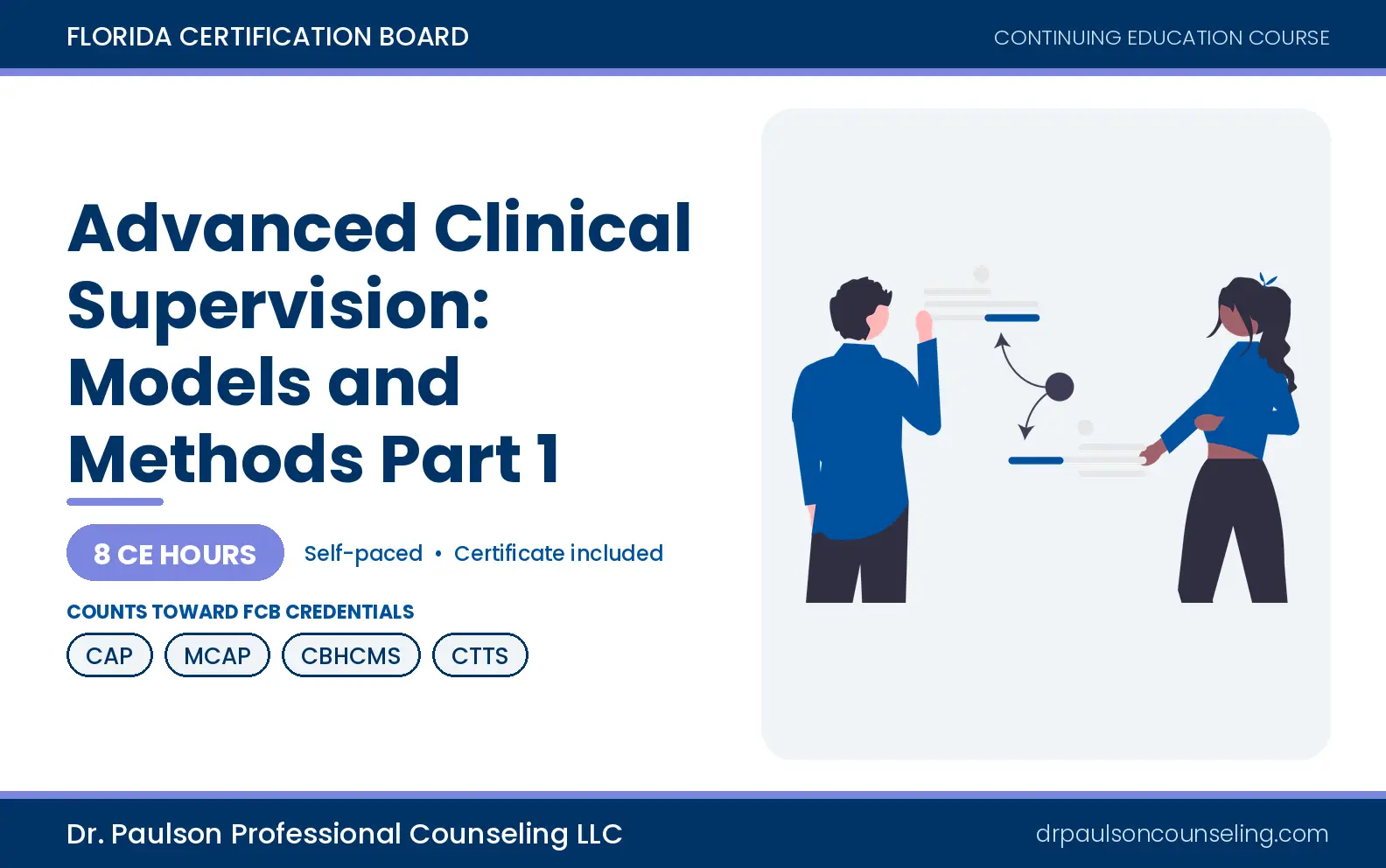
Advanced Clinical Supervision: Models and Methods Part 1 (8 CE Hours)

- 1 Section
- 9 Lessons
- 1 Quiz
- 8h Duration
Advanced Clinical Supervision: Models and Methods Part 1
- Introduction & Outline
- Module 1: The Crucible of Practice: Foundations and Functions of Clinical Supervision
- Module 2: Mapping Growth: Developmental Models of Supervision
- Module 3: The Many Hats: The Discrimination Model of Supervision
- Module 4: The Critical Bond: Building the Supervisory Alliance
- Module 5: The Architecture of Oversight: Formats and Methods
- Module 6: The Ethical Gatekeeper: Liability and Standards
- Module 7: Bridging the Gap: Cultural Humility in Supervision
- Module 8: The Mirror of Performance: Evaluation and Feedback
- Post Test Advanced Clinical Supervision Part 1
This comprehensive 8-hour continuing education course, Part 1 of an advanced series, is designed for Certified Addiction Professionals, Behavioral Health Case Manager Supervisors, and Tobacco Treatment Specialists seeking to elevate their supervisory practice. "Advanced Clinical Supervision: Models and Methods" moves beyond basic administrative oversight to explore the clinical, developmental, and ethical dimensions of the supervisory relationship. Participants will examine evidence-based supervision models, including the Integrated Developmental Model and the Discrimination Model, to effectively tailor interventions to supervisee needs. This course is designed around Florida Certification Board requirements for supervision training, equipping leaders to foster workforce retention, enhance clinical competence, and ensure public safety through rigorous, ethically sound supervision.
Want to submit a review? Login
Related Courses
Professional Responsibilities for Resiliency Advocates (3 Contact Hours)
Work through ethical dilemmas with the FCB Code of Ethics and a seven-step model
Maintain professional boundaries around dual relationships, gifts, and social media
Meet Florida child abuse reporting duties and protect privacy under HIPAA and FERPA
Resiliency Support for Resiliency Advocates (3 Contact Hours)
Coach coping and emotion regulation skills and model healthy responses to stress
Encourage positive behavior and redirect problems calmly, without shame
Guide goal setting with if-then plans and strengths-based problem solving
Behavioral Observations for Resiliency Advocates (3 Contact Hours)
Record objective, bias-aware observations with the ABC method
Stay situationally aware through active supervision and precorrection
Spot signs of distress, trauma responses, suicide risk, and possible abuse or neglect