
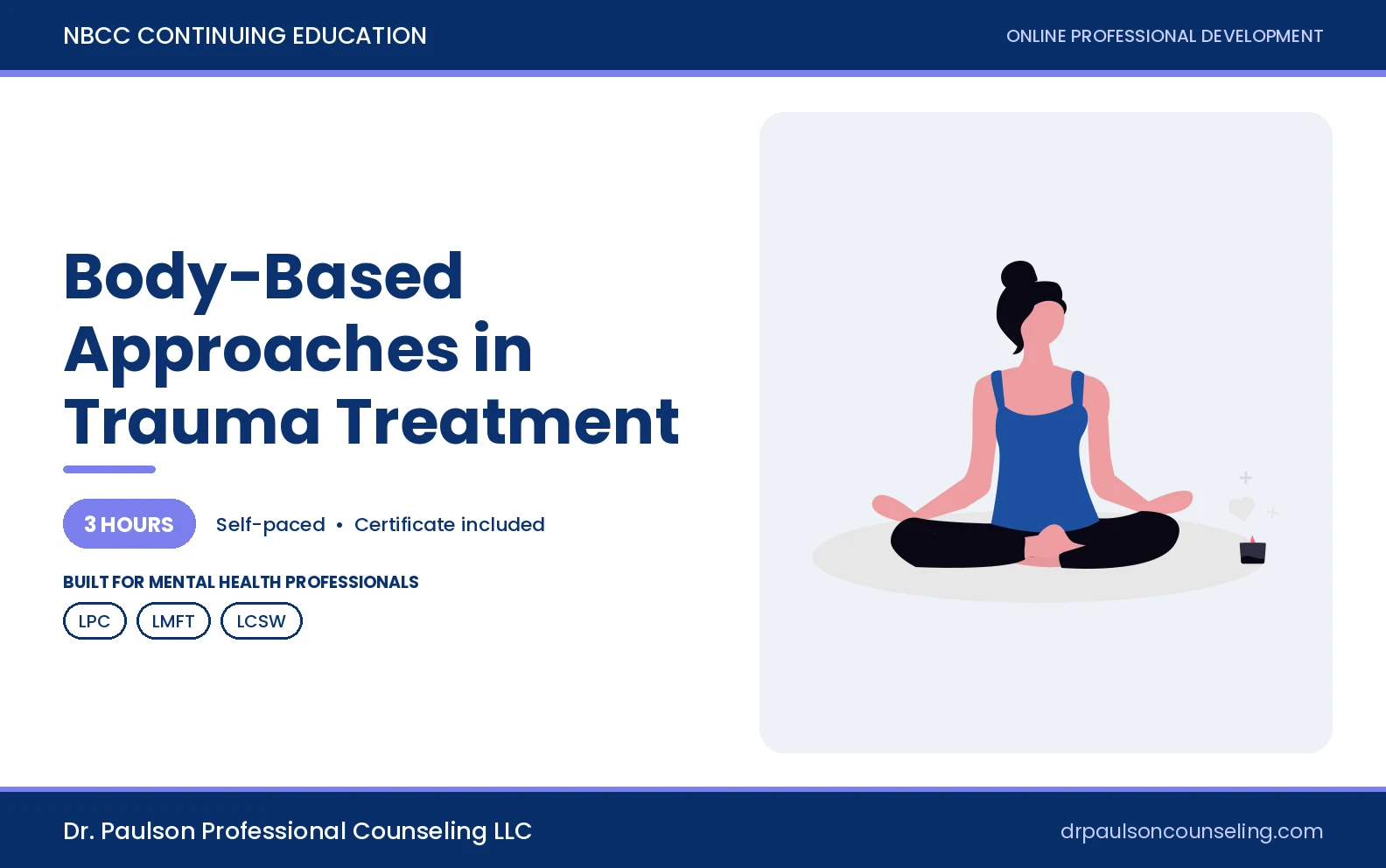
Body-Based Approaches in Trauma Treatment: Evidence, Theory, and Limits (3 Hours)

- 1 Section
- 5 Lessons
- 2 Quizzes
- 3h Duration
Body-Based Approaches in Trauma Treatment: Evidence, Theory, and Limits
- Course Overview and Introduction
- Module 1: Trauma, Stress Physiology, and the Body
- Module 2: Body-Based and Somatic Approaches and Their Evidence
- Module 3: Using Body-Based Skills Safely and Ethically
- References
- Post Test: Body-Based Approaches in Trauma Treatment: Evidence, Theory, and Limits (3 Hours)
- Program Evaluation
This three hour, text-based home study course reviews trauma and stress physiology, the theory and evidence behind somatic and body-based approaches (including the scientific debate about polyvagal theory), and how to use body-based skills safely and ethically alongside first-line trauma treatments.
Each module includes a practical routine, a tool training, a skills practice, and case studies set in different states.
This course is not approved or endorsed by any state licensing board. Participants should confirm current continuing education requirements with their own board or certification body.
Dr. Paulson Professional Counseling LLC has been approved by NBCC as an Approved Continuing Education Provider, ACEP No. 7987. Programs that do not qualify for NBCC credit are clearly identified. Dr. Paulson Professional Counseling LLC is solely responsible for all aspects of the programs.
State Board and Certification Requirements
Each licensing board and certification body sets its own continuing education rules. Our provider approvals and CE Broker reporting do not guarantee that this course will be accepted for your specific license, renewal period, or required topic. Please check your board’s current rules before you enroll. Questions? Email info@drpaulsoncounseling.com.
Want to submit a review? Login
Related Courses
Healing through Family & Community for Arizona Professionals (6 CE Hours)
Foundations of Client, Family, and Community Education
The Continuum of Care and Managed Care
Referrals and Care Coordination
AI and Clinical Documentation in Ohio: Ethics, Risks, and Responsible Use (4 Hours) -Ohio
Applies Ohio rule OAC 4757-5-09 to AI-drafted notes: the licensee develops and approves every note.
Explains the CSWMFT Board's AI guidance and proposed AI rules.
Shows why client information does not go into consumer chatbots, and what to do instead.
Theoretical Frameworks and Models of Clinical Supervision (6 Hours) -West Virginia
Supervisors apply social role models to select among teaching, counseling, and consulting stances based on supervisee need rather than habit.
Professionals assess developmental stage by domain and set the supervisory environment slightly beyond current functioning to prompt growth.
Clinical educators recognize the strengths and limits of psychodynamic, cognitive behavioral, person-centered, and systemic supervision traditions.