
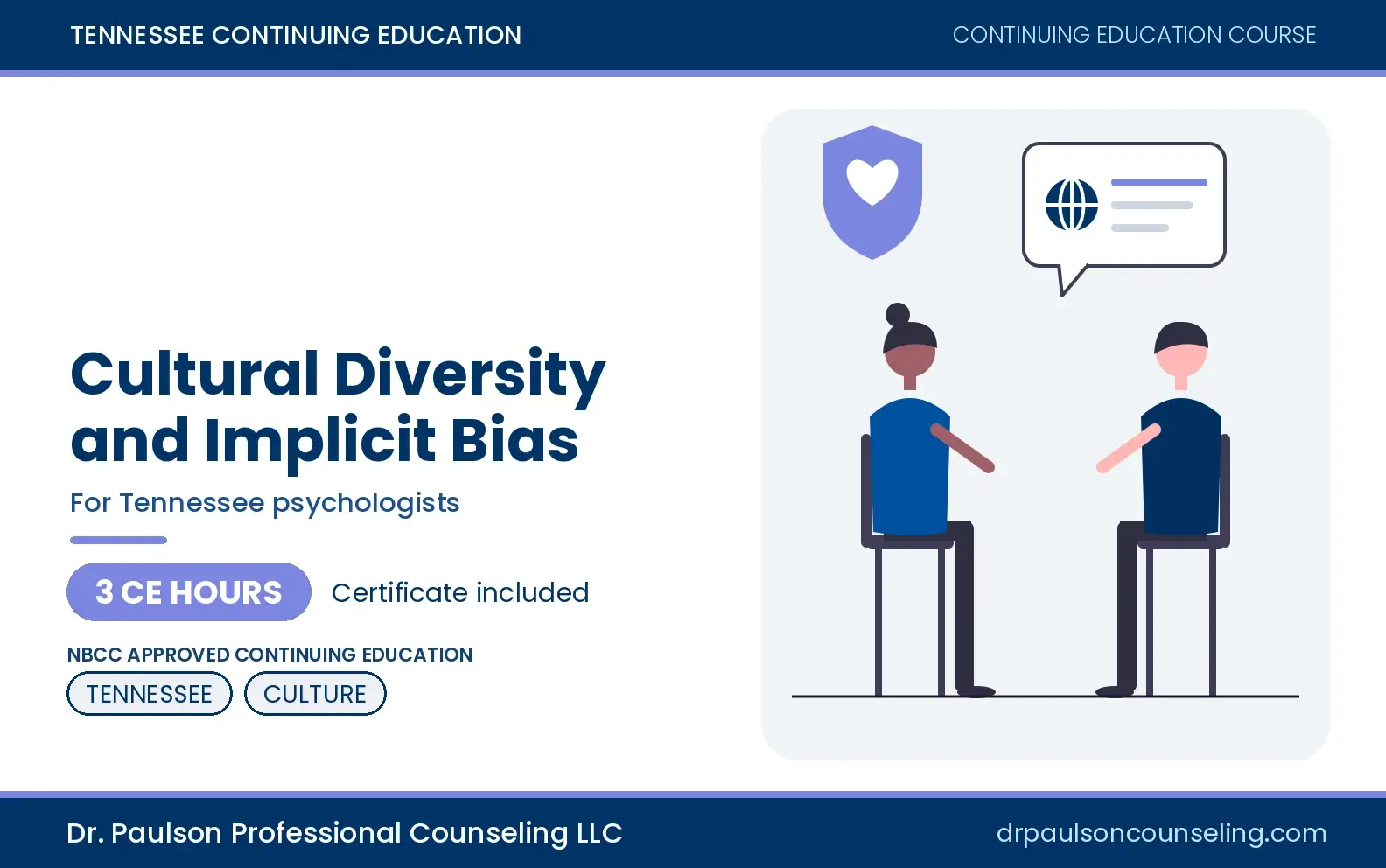
Cultural Diversity and Implicit Bias For TN Psychologists (3 Hours)

- 1 Section
- 5 Lessons
- 2 Quizzes
- 3h Duration
This course addresses the impact of unconscious attitudes and implicit cognitive stereotyping on clinical perception, decision-making, and health equity. The educational material delivers evidence-based strategies for providing culturally responsive care to diverse populations across aspects of identity such as age, disability, gender, race, religion, sexual orientation, and socioeconomic status. This targeted course is designed around the 3-hour cultural diversity requirement established by the Tennessee Board of Examiners of Psychology. State regulations dictate that professionals cannot exceed a maximum of 20 continuing education hours earned through asynchronous home-study courses. When you pass the post-test, you can download your certificate right away.
Want to submit a review? Login
Related Courses
Prevention of Medical Errors for Florida Mental Health Professionals (2 Hours)
Types of errors in mental health practice
Root-cause analysis and just culture
Error reduction: checklists, SBAR, and safe handoffs
Domestic Violence for Florida Mental Health Professionals (2 Hours)
National and Florida domestic violence data
Dynamics, coercive control, and lethality indicators
Screening tools and safe screening practice
Florida Laws and Rules for Chapter 491 Licensees (3 Hours)
Chapters 456 and 491, F.S., and rule title 64B4, F.A.C.
Licensure, renewal, continuing education, complaints, and discipline
Confidentiality, records, and Florida mandatory reporting